CHDI Hosts Data Walk, Exploring Trends in Connecticut's Children's Behavioral Health Data
On Monday, June 29th, CHDI hosted our first-ever Data Walk in collaboration with the state Children's Behavioral Health Plan Implementation Advisory Board (CBHPIAB), funded by the Connecticut Department of Children and Families.
Held at the Bristol Public Library, the event was hosted by CBHPIAB co-chairs Elisabeth Cannatta, PhD, of Wheeler, and Ann Smith, JD, MBA, of AFCAMP Family Empowerment Center, along with CHDI Project Coordinator Felicia Annan-Mills, MPH, and Director of System Development and Policy Aleece Kelly, MPP.
First, the presenters provided an overview of the new Children's Behavioral Health System Dashboard for Connecticut, which tracks trends across the state’s children’s behavioral health system using the most recent available data compiled from a variety of sources. The goal for the day was established: strive to understand the data, share perspectives on the "why" behind it, and most importantly, identify opportunities for action to be included in a future CHDI data brief.
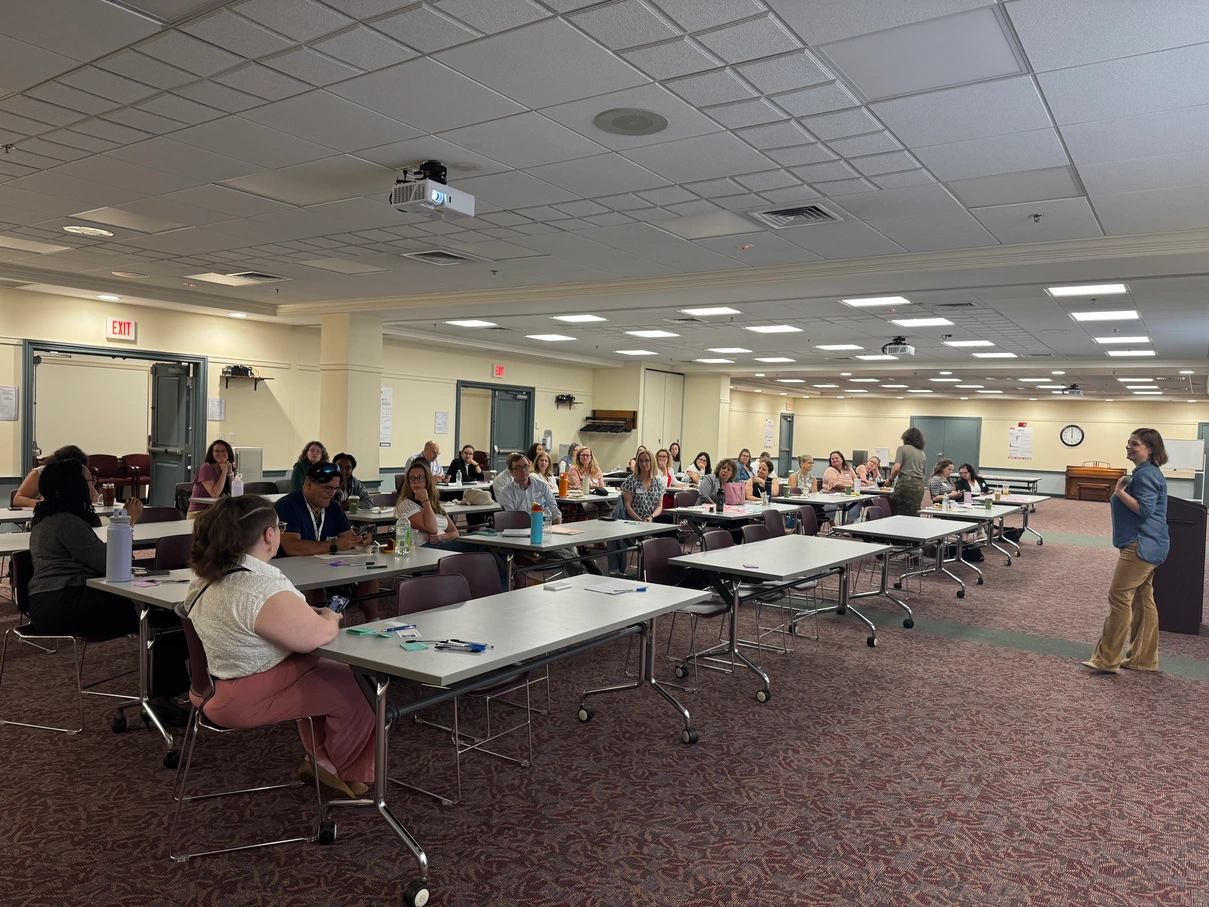
CHDI's Aleece Kelly welcomes Data Walk attendees in the Bristol Public Library Community Room
Talking through the findings
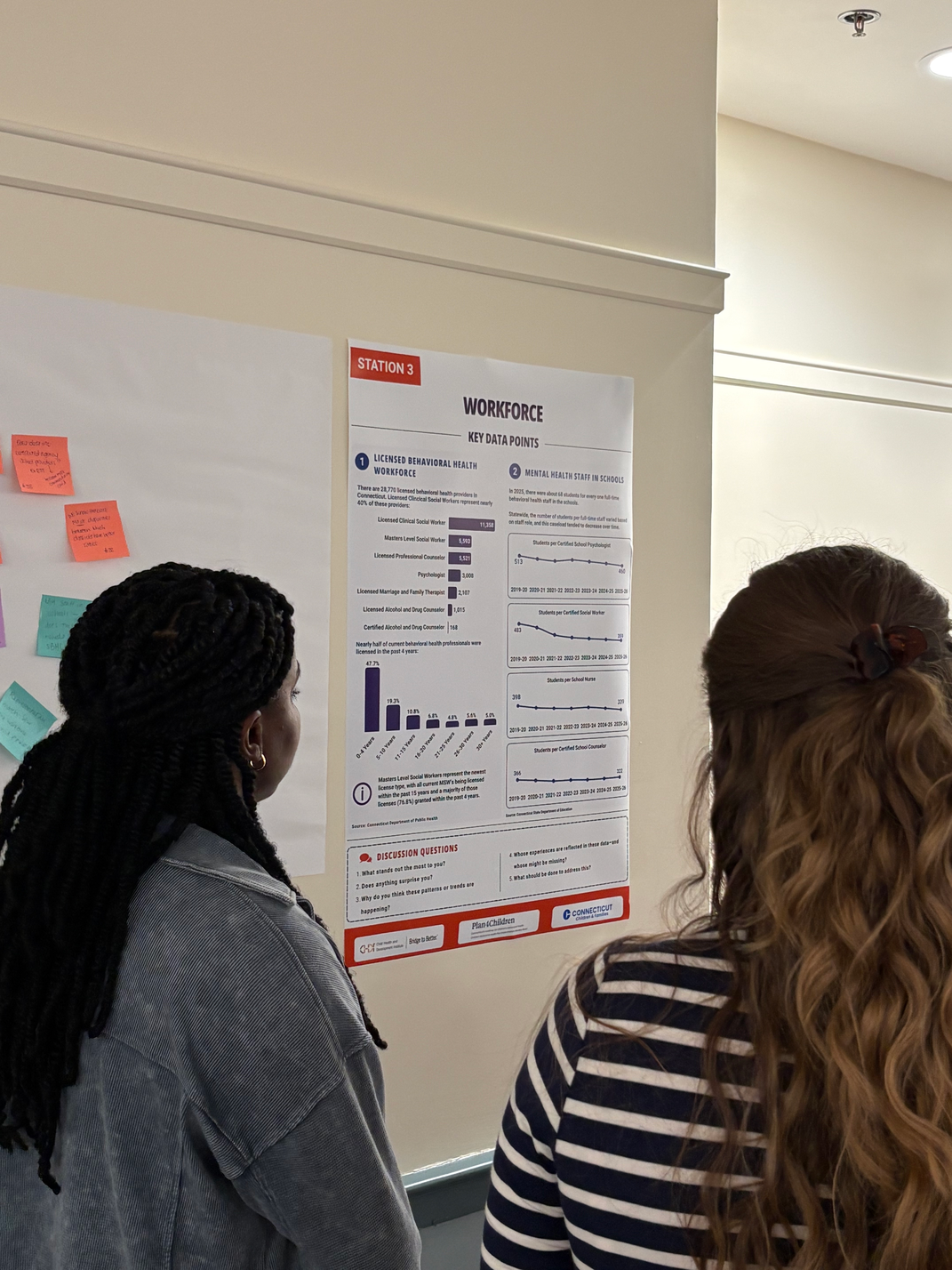
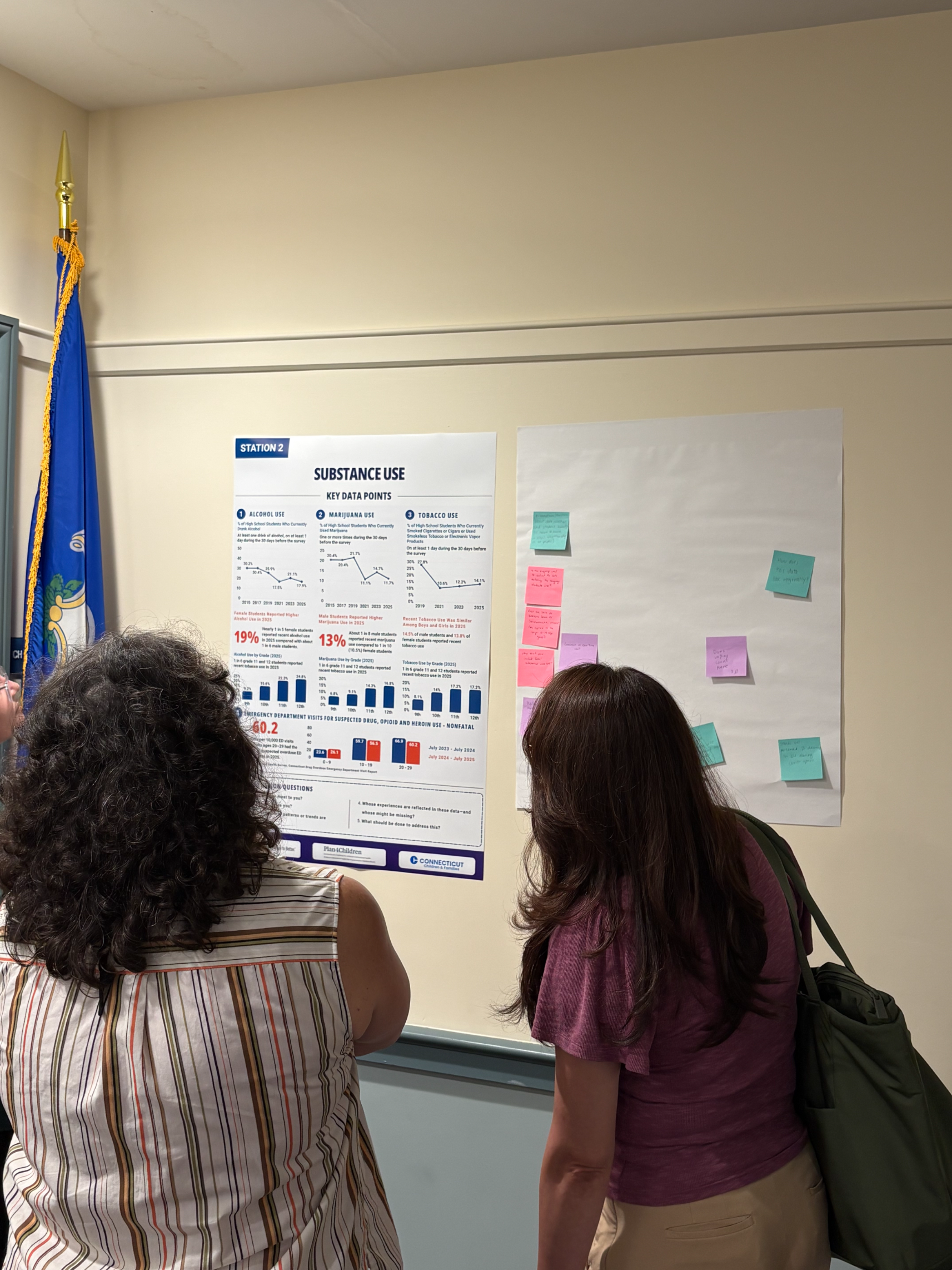
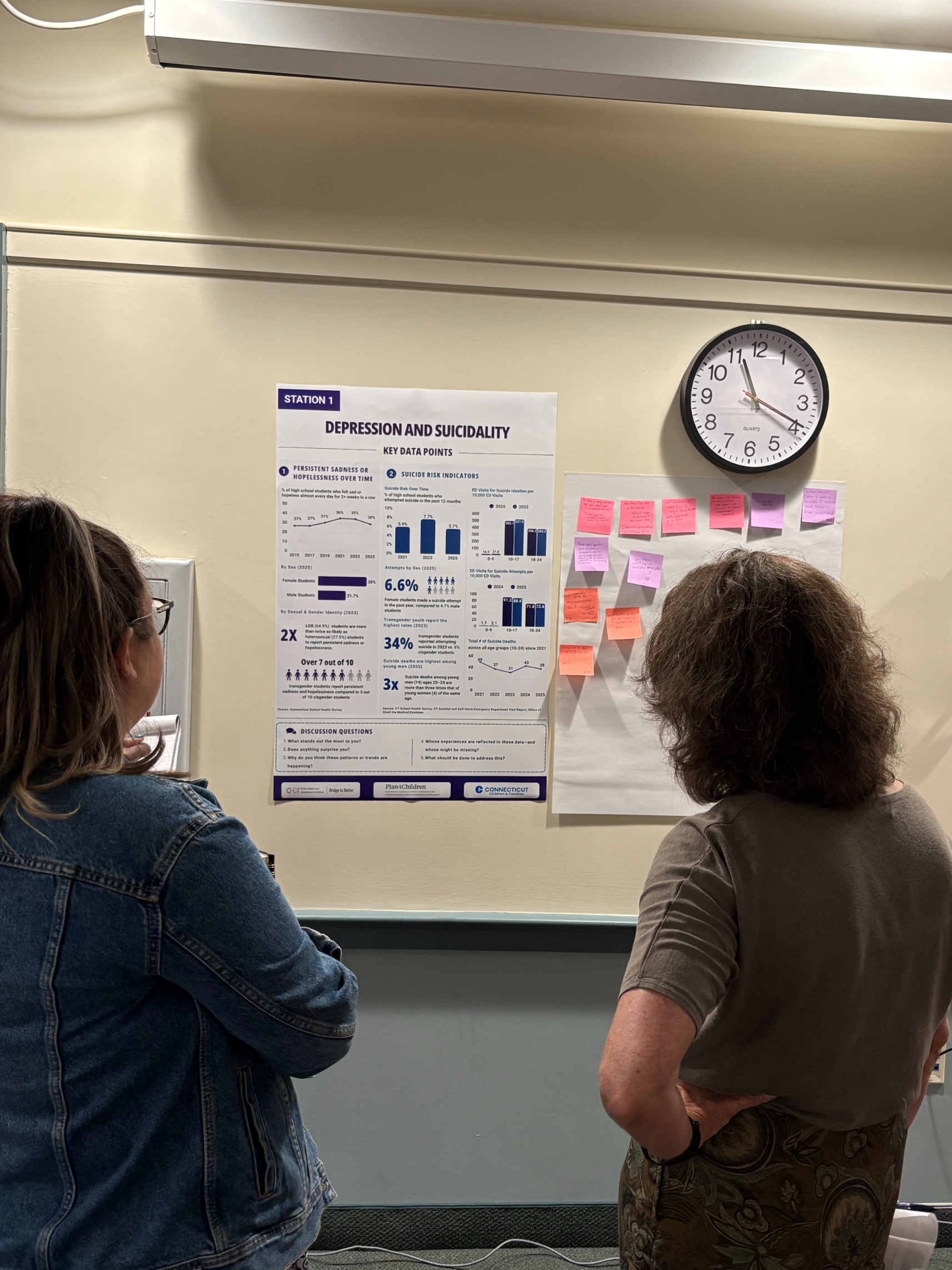
Participants—a diverse group of nearly 40 parents, caregivers, behavioral health providers, advocates, community organization staff, state agency staff, researchers, funders, attorneys, and more—then embarked on the data walk, breaking up into groups and rotating through five datasets. Categories of data included substance use, workforce, system data, social drivers of health, and depression and suicidality.
Each group spent 8-10 minutes at each station, exploring the charts and key findings, discussing them and sharing relevant ideas and experiences, and recording their thoughts or recommendations on sticky notes.
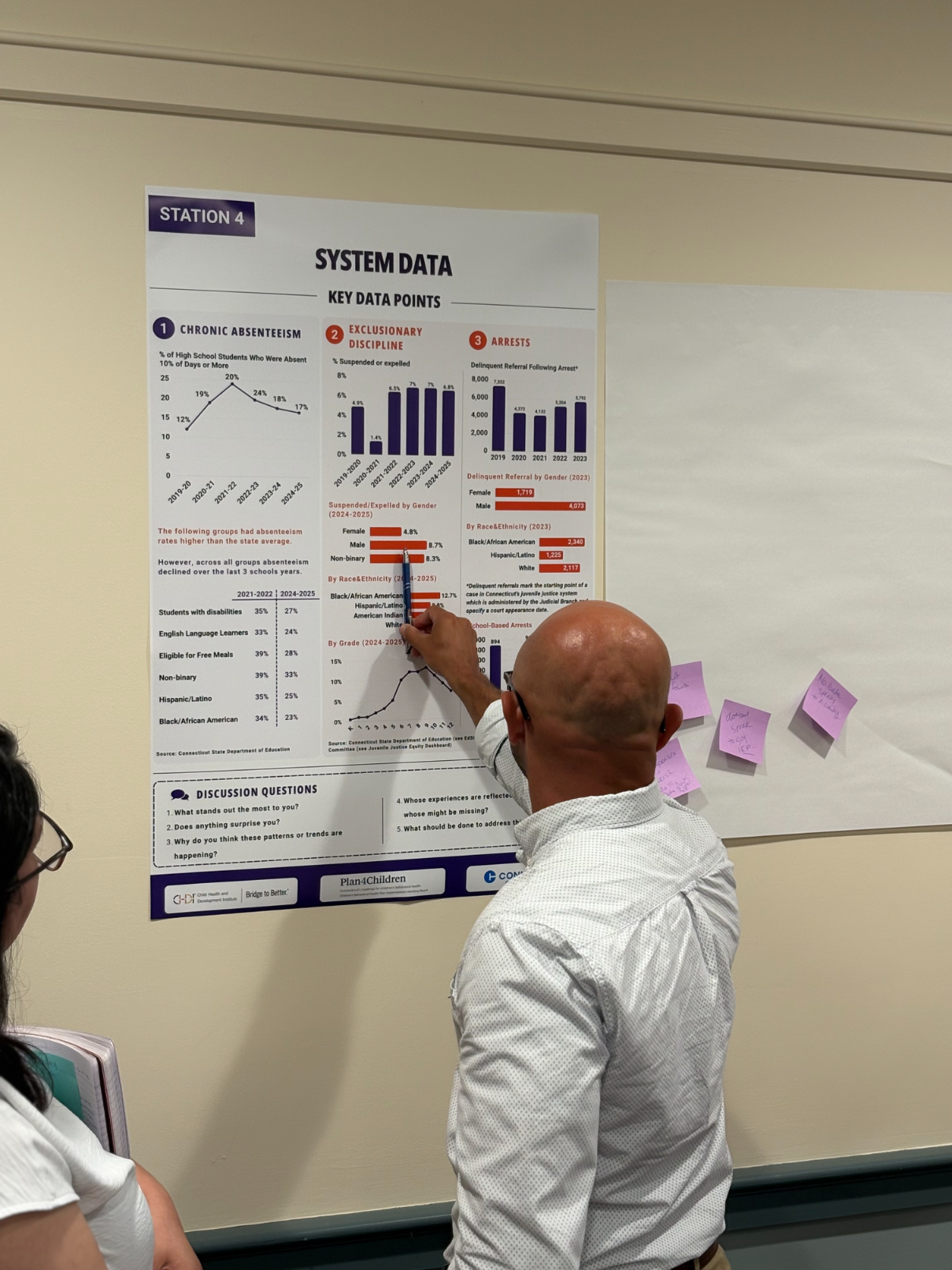
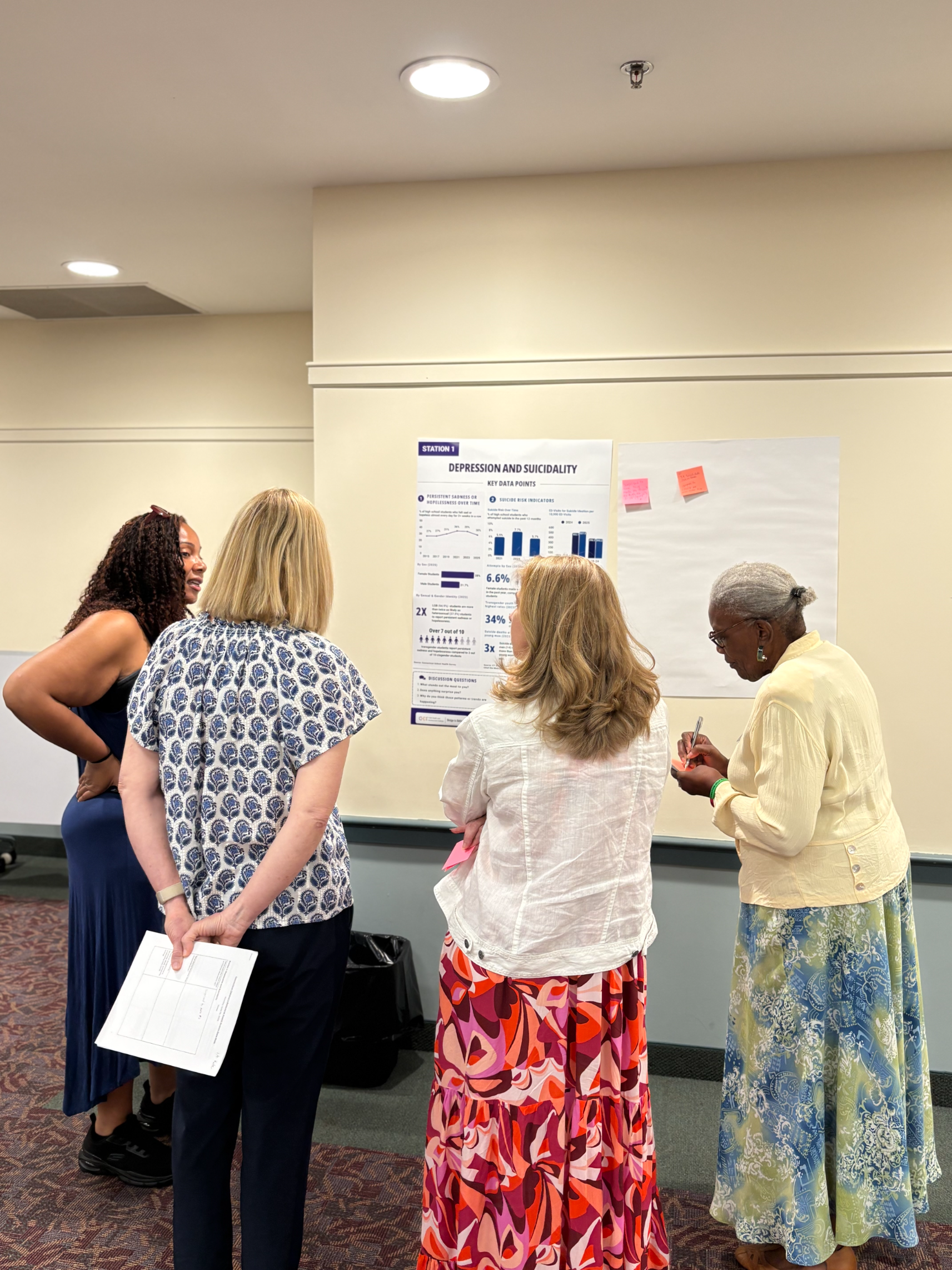
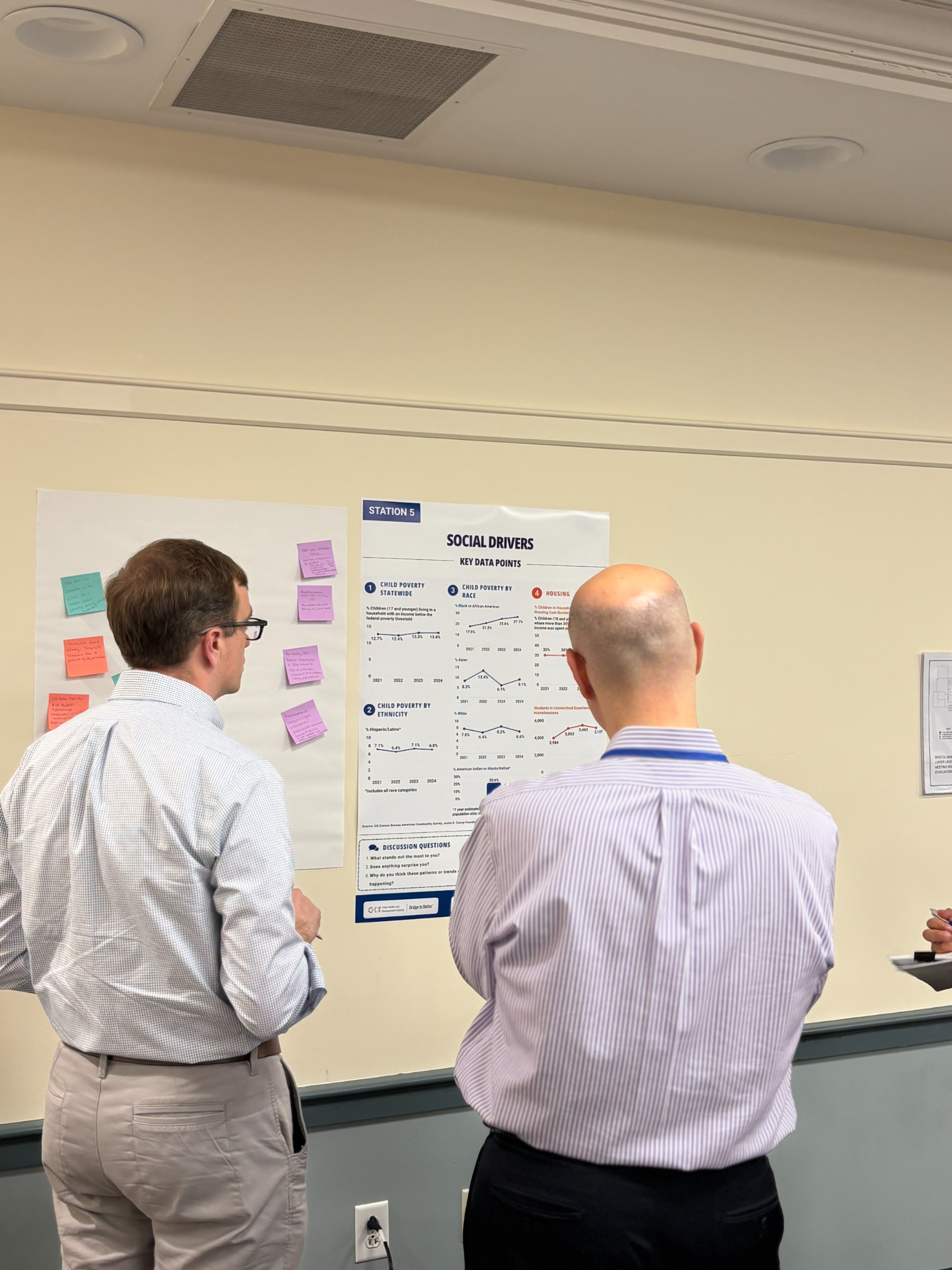
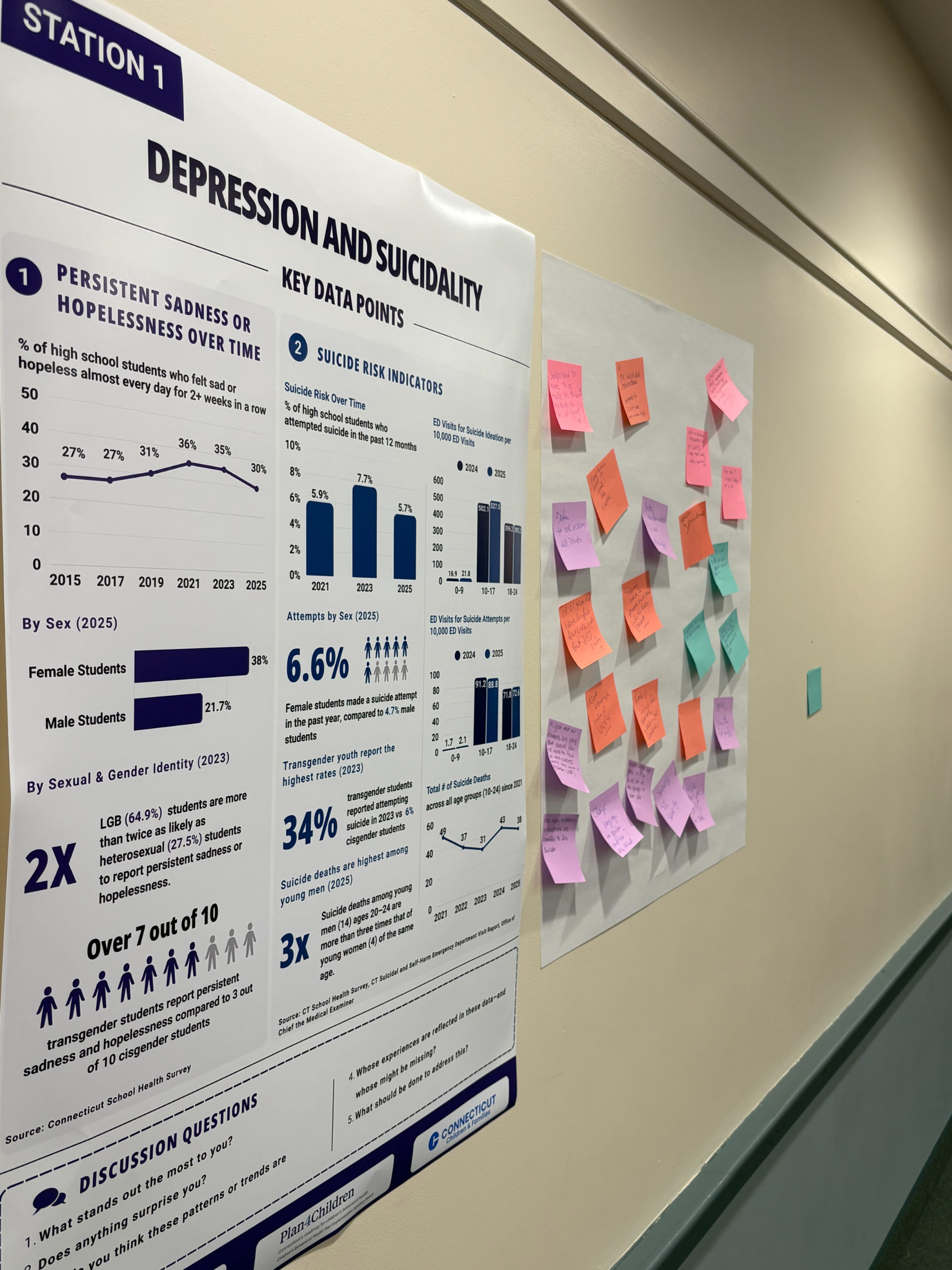
At the end of the session, participants reflected on their hopes for the future and discussed how the data could inform future policy, responding to the following questions:
What is one policy recommendation you would make?
Participant responses:
- "Standardize definitions [and categories across] the state."
- "Allow systems to share data more readily with each other and have communication about children and youth who intersect all systems."
- "Data collection should be a diverse set of data that consistently identifies size, special populations, race/ethnicity, age, location, and socioeconomic status across each variable identified."
- "Track families sooner."
- "[Identify] ethnicity information based on suicide challenges."
- "Include school nurses' documentation in data points."
- "Find better ways to gather data about families and regional communities to better understand the "why" [behind the data]."
Participant responses:
- "Increase reporting from Juvenile Review Boards and Youth Service Bureaus."
- "Restrict phone use in schools."
- "I would encourage legislators to look at current policy for alignment/overlap to determine where there are duplicate efforts and gaps in services/voices."
- "[Support] a well-trained, diverse workforce, specifically trained in best practices and evidence-based interventions."
Participant responses:
- "Lots more intervention and prosocial support for younger children."
- "Require SBIRT for all youth in 8th-10th grade and collect data to ensure early intervention is available."
- "State-wide prevention for all students in schools related to behavioral health and substance use. Increase education and confidence in discussing substance use in schools."
Participant responses:
- "Mix statewide and local [data] for partnership with families."
- "Incorporate parents' feedback and communication in how the data can better serve them and their children."
- "Carve out protected space for youth and family voice to inform this work directly. Build space for lived experience in policy spaces and connect this to compensation or career ladders, i.e. peers."
Participant responses:
- "Standardize definitions [and categories across] the state."
- "Allow systems to share data more readily with each other and have communication about children and youth who intersect all systems."
- "Data collection should be a diverse set of data that consistently identifies size, special populations, race/ethnicity, age, location, and socioeconomic status across each variable identified."
- "Track families sooner."
- "[Identify] ethnicity information based on suicide challenges."
- "Include school nurses' documentation in data points."
- "Find better ways to gather data about families and regional communities to better understand the "why" [behind the data]."
Participant responses:
- "Increase reporting from Juvenile Review Boards and Youth Service Bureaus."
- "Restrict phone use in schools."
- "I would encourage legislators to look at current policy for alignment/overlap to determine where there are duplicate efforts and gaps in services/voices."
- "[Support] a well-trained, diverse workforce, specifically trained in best practices and evidence-based interventions."
Participant responses:
- "Lots more intervention and prosocial support for younger children."
- "Require SBIRT for all youth in 8th-10th grade and collect data to ensure early intervention is available."
- "State-wide prevention for all students in schools related to behavioral health and substance use. Increase education and confidence in discussing substance use in schools."
Participant responses:
- "Mix statewide and local [data] for partnership with families."
- "Incorporate parents' feedback and communication in how the data can better serve them and their children."
- "Carve out protected space for youth and family voice to inform this work directly. Build space for lived experience in policy spaces and connect this to compensation or career ladders, i.e. peers."
What made you feel hopeful after seeing this data?
Participant responses:
- "We have a good range of data publicly available."
- "We are willing to look deeper into what the data means and what [the gaps are] that could make it more meaningful."
- "CT is a leader in evaluating."
- "We're bringing this data to light."
Participant responses:
- "Decrease in substance use over time."
- "There are improvements within areas that we have been focusing on through an increase in supports and services."
- "There are improvements and key areas that have received funding and support in the last several years."
Participant responses:
- "The ability to have these conversations as a community with varied backgrounds and expertise."
- "Partnership with colleagues who I don't always get to see and brainstorm with."
- "The dynamic of the group present. There are many voices, agencies, and organizations who are invested in this work."
- "Being in a room full of individuals dedicated to this work made me feel hopeful."
- "The focus on youth and family voice."
- "Collaboration with different systems."
Participant responses:
- "We are looking at these issues. The comments make me confident that the right discussions are happening to move us forward."
- "We have so many thoughtful, caring people in the state who are willing to dig deep, ask hard questions, and do the hard work!"
- "Opportunity for change."
- "Participation and investment in deep diving."
- "The conversation has begun and [is] intentionally focused on change and equity in the manner data is shared."
Participant responses:
- "We have a good range of data publicly available."
- "We are willing to look deeper into what the data means and what [the gaps are] that could make it more meaningful."
- "CT is a leader in evaluating."
- "We're bringing this data to light."
Participant responses:
- "Decrease in substance use over time."
- "There are improvements within areas that we have been focusing on through an increase in supports and services."
- "There are improvements and key areas that have received funding and support in the last several years."
Participant responses:
- "The ability to have these conversations as a community with varied backgrounds and expertise."
- "Partnership with colleagues who I don't always get to see and brainstorm with."
- "The dynamic of the group present. There are many voices, agencies, and organizations who are invested in this work."
- "Being in a room full of individuals dedicated to this work made me feel hopeful."
- "The focus on youth and family voice."
- "Collaboration with different systems."
Participant responses:
- "We are looking at these issues. The comments make me confident that the right discussions are happening to move us forward."
- "We have so many thoughtful, caring people in the state who are willing to dig deep, ask hard questions, and do the hard work!"
- "Opportunity for change."
- "Participation and investment in deep diving."
- "The conversation has begun and [is] intentionally focused on change and equity in the manner data is shared."
Explore the data behind the walk
The data we analyzed was sourced from the Children's Behavioral Health System Dashboard for Connecticut, developed by CHDI in partnership with the Data Integration Workgroup of the Children's Behavioral Health Plan Implementation Advisory Board. The workgroup formed in 2021 to improve the coordination of data collection and reporting, making data transparent, accessible, and publicly available. (Shout out to Senior Project Coordinator Alyssa Korell, PhD, who played a lead role in the dashboard's development over the past two years!)
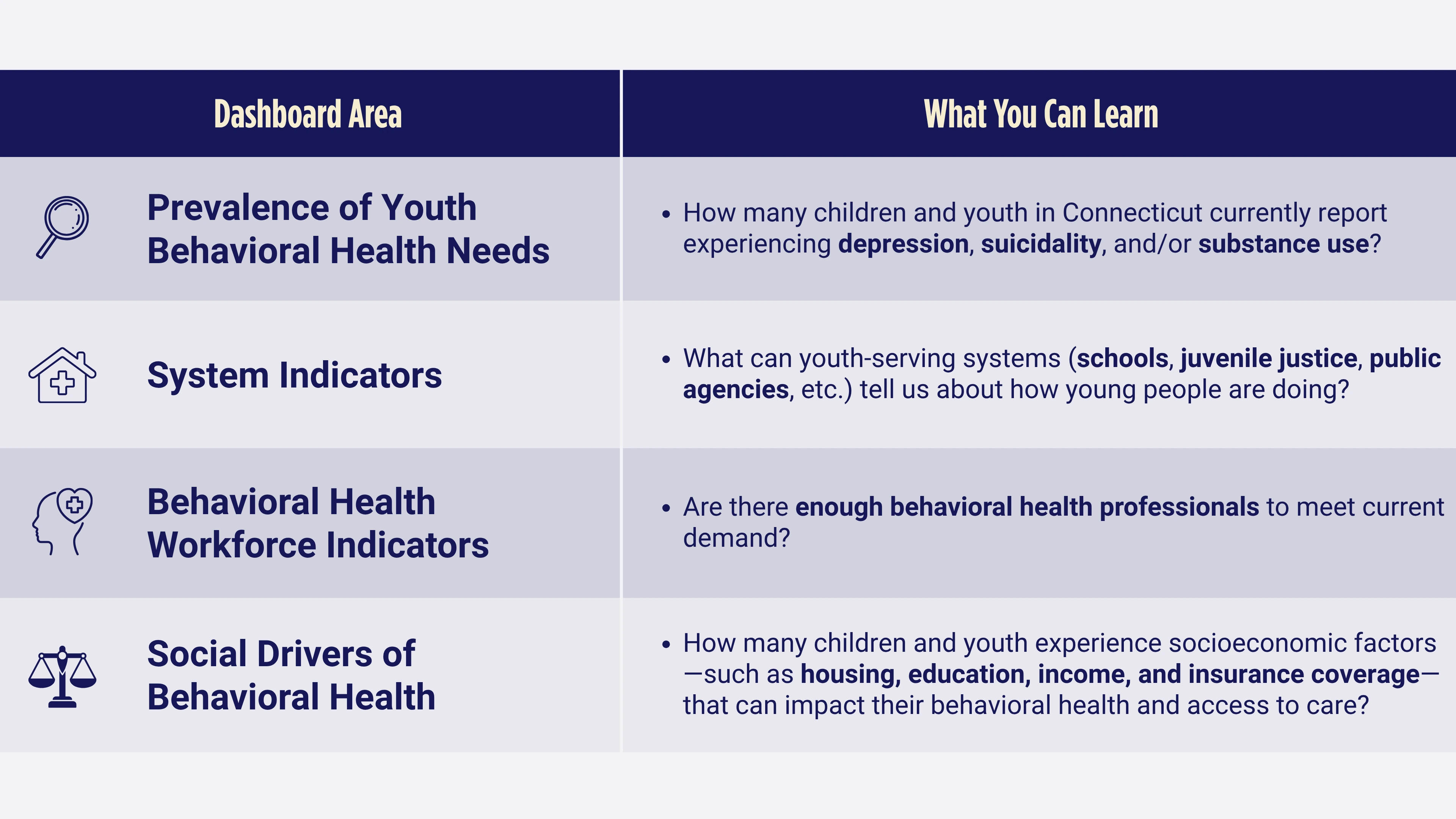
The interactive dashboard features data compiled from a variety of up-to-date sources, including state agencies, youth and provider surveys, behavioral health organizations, and more, and is updated as new data becomes available. Key indicators for the children's behavioral health system are organized into four main areas: prevalence of youth behavioral health needs, system-level indicators, workforce, and social drivers of behavioral health.
Didn't have a chance to join us for this Data Walk? Be sure to sign up for CHDI's email list to be the first to hear about future events!