School Mental Health Spotlight: Q & A with North Street School
North Street School in Windsor Locks is currently in its second year of participation in the Connecting Schools to Care IV Students (CONNECT IV) initiative. CONNECT IV is a partnership of the CT Department of Children and Families, CHDI, Carelon Behavioral Health, FAVOR, Inc., and The Consultation Center at Yale University. We work with Connecticut schools and districts statewide to enhance student mental health supports and strengthen connections to community-based behavioral health services through assessments, training, quality improvement support, and other technical assistance—all at no cost to participating schools.
CHDI Project Coordinator Rosie Breindel interviewed Principal Giovanna Testani and School Social Worker Brittany Kokofsky about how CONNECT has helped transform their school's approach to supporting student well-being and benefited the entire school community. This conversation has been lightly edited for clarity and length.
Thanks for sharing your experiences with us. To start, could you tell me about your roles at the school and your previous involvement with student mental health initiatives?
Giovanna Testani: As the administrator at North Street School, my role is to work with all staff members to understand the mental health needs of our students, so we can collaborate in identifying action steps and coordinating resources to address their needs. Prior to this partnership, I have always considered the mental health needs of our students a priority. However, since partnering with CHDI, we have been able to establish new systems and structures that support our efforts and have been connected to community resources.
Brittany Kokofsky: As a school social worker, I focus heavily on the social-emotional needs of our students, which directly correlates to mental health. When students have the tools to manage their feelings and relationships, their mental health thrives. Although as a social worker, mental health is a main priority, I am continuously learning different ways to improve my knowledge in this area, and this partnership has helped with that.
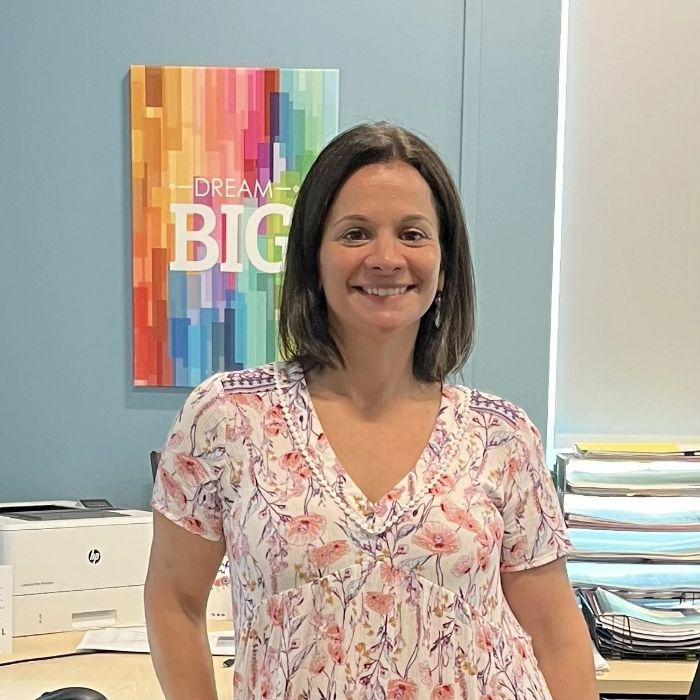
Giovanna Testani, Principal, North Street School
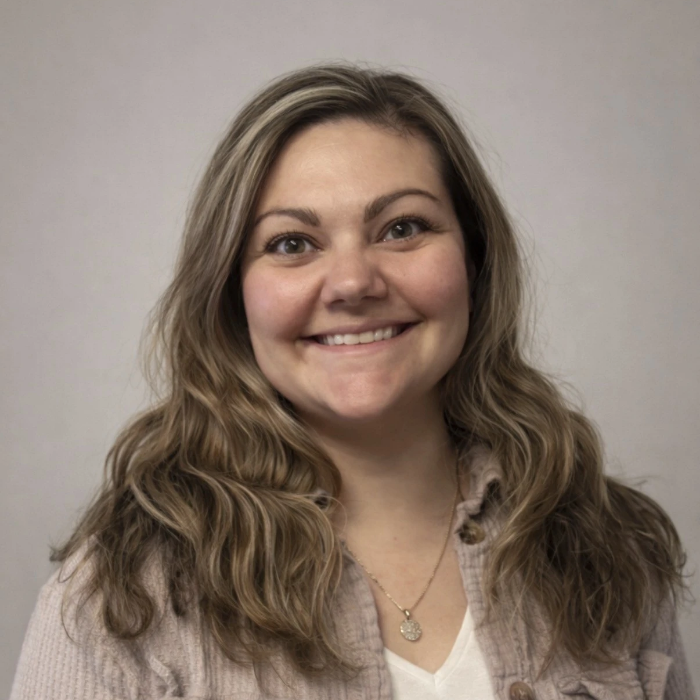
Brittany Kokofsky, School Social Worker, North Street School
Can you describe your school's participation in the CONNECT IV initiative?
Kokofsky and Testani: North Street School began the CONNECT initiative in the fall of 2024. During our first year, we worked with CHDI to develop a School Implementation Plan based on the School Mental Health Quality Assessment (SHAPE). This plan targeted Mental Health Promotion Services and Supports (Tier 1) with clearly outlined goals, action steps, and timelines.
Our team met weekly to monitor progress, and we brought in additional stakeholders along the way. We also met with our CHDI coach, Sarah White, throughout the first school year and attended monthly Community of Practice (CoP) sessions. As a result, we were able to learn from districts across the state that were working towards similar goals, build connections with community resources, and successfully reach the goals within the implementation plan.
During our second year of participation, we continue to attend Community of Practice meetings and use our established weekly meetings to continue the work started last year. We also partnered with Circle Works to provide professional development around restorative practices—this partnership was also made possible through the support of CHDI. In addition, we continue to meet with Sarah and use the database of resources provided by CHDI as we continue to improve our practice.
What is the biggest change you've noticed so far as a result of CONNECT IV?
Kokofsky: The biggest change that I’ve noticed after partnering with CONNECT is [in] our overall school climate—both students and staff. We have done a lot of work with restorative practices, and I feel that had a big part in both climate areas, because its framework is focused on building relationships and not reacting with punitive discipline.
CONNECT is helping our whole school community. Teachers are implementing proactive and restorative circles in their classrooms, which fosters a sense of community. This has helped staff approach certain situations with a positive mindset that teaches responsibility and accountability. We have also held circles with staff to approach problems proactively and restoratively.
Testani: Taking the time to create an implementation plan with CHDI helped our team create clear action steps towards a positive school climate. By using our data from the SHAPE assessment, we were able to set clear goals. Most importantly, we had the support and resources from CHDI to make these goals a reality.
Staff, students, and families have all benefited from this work. We now have a shared vision around mental health promotion, and we are taking steps towards continuous improvement. The implementation team—consisting of administration, social worker, school psychologist, special education teacher, and BCBA—has been able to take the information from our meetings with Sarah and the CoP sessions to support all stakeholders. As a result, this team has grown in capacity and can better support our community.
What were the biggest hurdles?
Kokofsky: I wouldn’t say this was necessarily hard to do, but it is a change of mindset. I feel like, as a school, we were already leaning towards a restorative practice mindset, and the trainings really brought that to light and helped foster the implementation in our school. It has brought on some difficult conversations among both students and staff; however, the results have been worth it!
Testani: Creating the time and space to do this important work can be challenging. Our staff came into last year asking for behavior support to be a priority, so when this partnership became available, it was an easy decision to make. Setting aside the time is critical, and it can be challenging during a busy school day. We had to make a commitment to meet once per week to review progress and make sure we were following the action plan. While a challenge, it was also one of the reasons we were able to be successful.
What advice do you have for other schools interested in CONNECT?
Kokofsky: Trust the process! It may seem a bit overwhelming at first, but work together with your team to complete the surveys to gather the necessary data that will show what areas your school could use improvement in.
Testani: You will get what you put into it. There are so many resources available through the connections you will be able to make along the way.
What is your hope for your students and school after CONNECT?
Kokofsky: My hope is to continue benefiting from the resources that were provided for us through CONNECT and to maintain the relationships that we have made with other agencies through this program. That way, we can continue to improve our overall climate and school mental health processes. In the long-term, I hope to see our students' and staff’s overall well-being continue to improve and our sense of community grow stronger.
Testani: We went into this process with the hope that we would be able to provide mental health support and resources to staff, students, and families. My hope is that we will have all grown through this process, and [that we create] a positive school culture where all stakeholders can thrive.
What is an immediate impact you've noticed as a result of your participation?
Kokofsky: We were immediately connected to [CONNECT partners] Carelon and FAVOR, which have provided us with resources to share with our families who may be looking for support with mental health, behavioral, medical, or educational advocacy services. They have even attended several school events to provide families with resources!
Testani: We have more resources and partnerships available to us as a result of this process. We have been able to review material around educational safe spaces, graduated responses, restorative practices, and Social-Emotional Learning (SEL) screenings, to name a few. Through our partnerships with Carelon and FAVOR, we have additional trainings available to not only our staff, but also our families.
"CONNECT is helping our whole school community. Teachers are implementing proactive and restorative circles in their classrooms, [helping] staff approach situations with a positive mindset that teaches responsibility and accountability. We have also held circles with staff to approach problems proactively and restoratively!"
What resources were most helpful in expanding or improving your school's comprehensive mental health system?
Kokofsky: The partnerships that we have formed with outside agencies, as well as attending monthly Community of Practice meetings with other schools that are participating in the CONNECT initiative. We have been able to gain insight and hear ideas from other schools to improve our own processes.
How has CHDI's technical assistance and support with the SHAPE system enhanced your understanding of North Street School's needs and informed your planning?
Testani: Meeting with our coach, Sarah White, after the SHAPE assessments to review the results helped our team understand our strengths and growth areas. It gave us time to reflect on the status of our school so we could create targeted goals. Sarah was able to take the data and create graphs that really showcased how our school was performing, and then compare them after a full year of implementation. It was rewarding to see the growth!
Get Involved
Want to learn more about CONNECT IV?
- Download our free School Mental Health Resource & Support Guide
- Watch this March 2026 webinar for an in-depth overview of how CONNECT IV works
See if your school is a good fit for CONNECT IV
To inquire about CONNECT IV participation, contact Sarah White, LCSW, or click here to learn more about the CONNECT IV Students initiative.