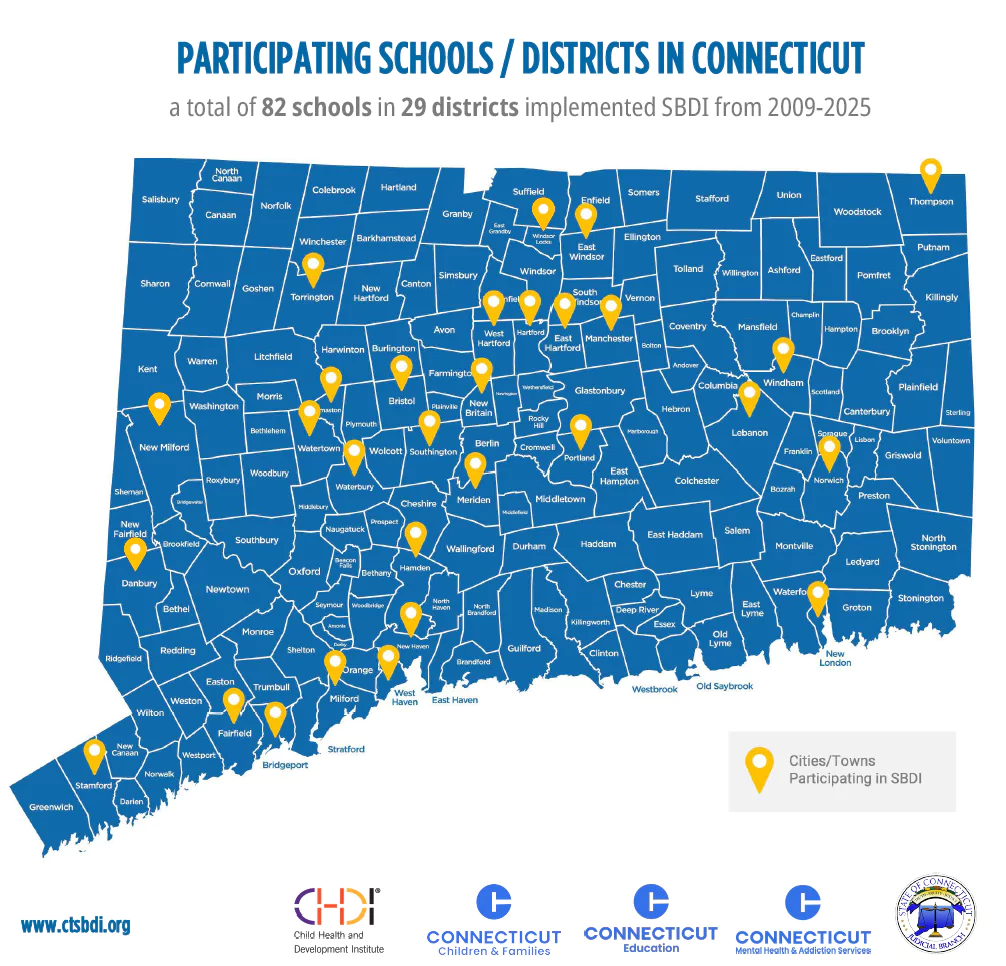
CHDI and partner schools testify on the impact of Connecticut School-Based Diversion Initiative
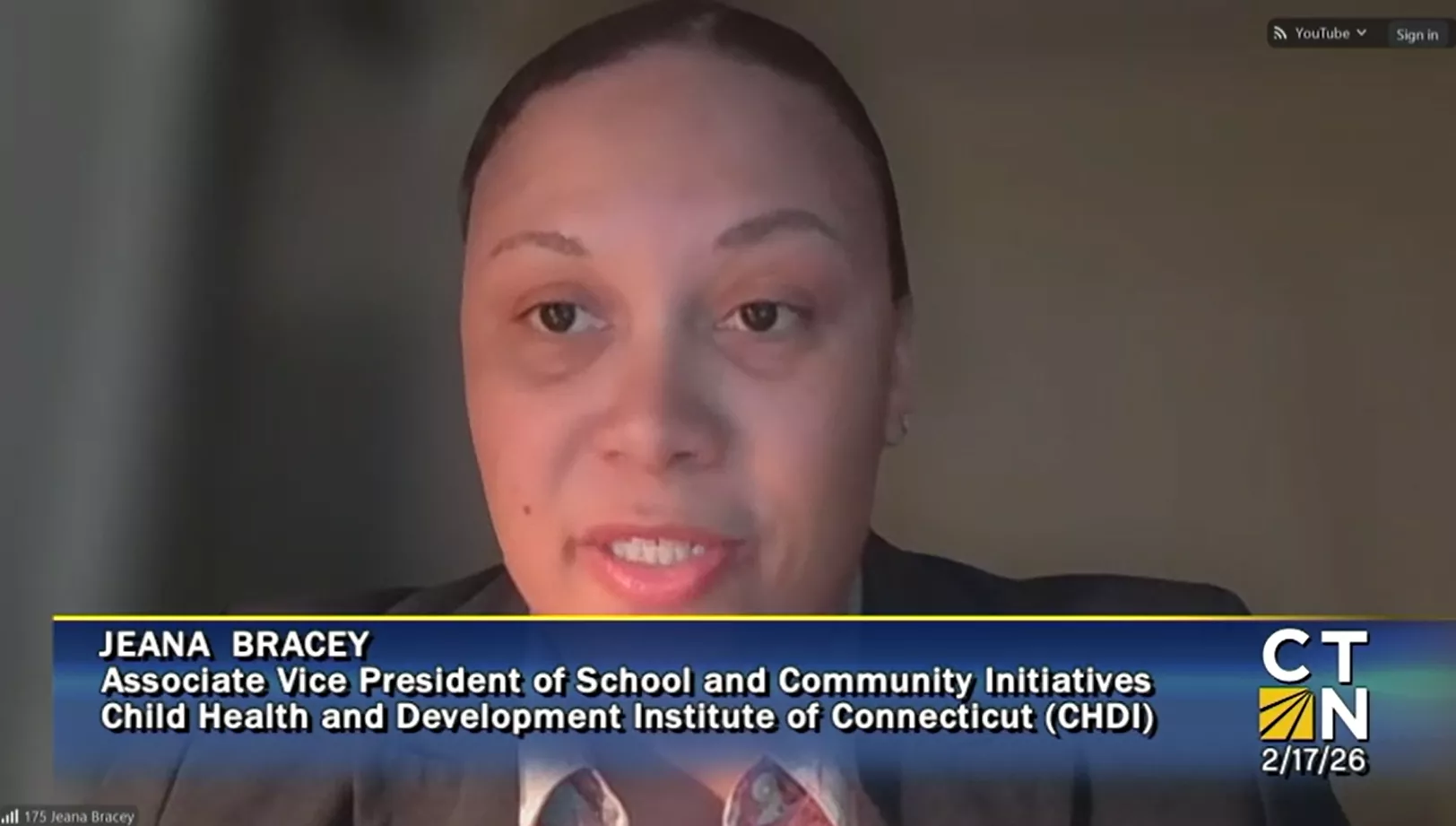
Earlier this week, CHDI Associate Vice President of School and Community Initiatives, Jeana Bracey, PhD, testified at an Appropriations Committee hearing on proposed adjustments to the State Department of Education budget, urging legislators to maintain full funding for the School-Based Diversion Initiative (SBDI). SBDI is a statewide program that works with schools, police, and community-based behavioral health providers to reduce in-school arrests, suspensions, and expulsions for students with behavioral health challenges. Governor Lamont proposed a 20% cut to SBDI in his adjusted budget for FY 2027.
Dr. Bracey highlighted the strong outcomes among participating SBDI schools and districts since the program's inception in 2009, including:
- 5,500 teachers across 82 Connecticut schools trained on restorative practices and understanding the impact of trauma and behavioral health challenges on student behavior, impacting over 91,000 students
- 150 school resource officers and other law enforcement professionals trained
- 25% decrease in court referrals among participating schools (compared to pre-SBDI)
- 24% increase in referrals to behavioral health services
- Cost savings for Connecticut taxpayers due to reduced arrests and juvenile justice involvement
"The cut [in the Governor's proposed budget] would dramatically limit the program’s reach and effectiveness, disrupt services currently in place, and will ultimately be harmful to students, schools, and communities," she said.
Watch Dr. Bracey's testimony on CT-N
Many schools and districts that have participated in SBDI - including Bridgeport, Danbury, New Britain, Waterbury, Windsor Locks, and West Hartford - joined CHDI in submitting testimony on the impact of the program on their students, staff, and communities.
"SBDI was developed to address exclusionary discipline in Connecticut, and it has delivered. We are keeping kids in classrooms and improving staff's capacity to support student well-being by improving practice and policy."
"Don't just take my word for it," said Dr. Bracey in closing. "You have received 15 additional written testimonies as letters of support from leaders at eight SBDI districts detailing the profound impact of how SBDI is supporting teachers, helping improve student outcomes, contributing to positive school climate, and strengthening community connections."
Swipe below to read excerpts of testimony from participating SBDI schools - or click here to read all school testimony in full.
What Connecticut Schools Say About SBDI
CHDI was one of the lead developers of the SBDI model and currently serves as the initiative's Coordinating Center. Since 2009, we've partnered with 82 schools in 29 districts across Connecticut to help them train staff, build connections with youth crisis services and other community-based service providers, update discipline policies, clarify the roles of school resource officers, evaluate outcomes, and more. Additional schools and districts have expressed interest in participating next year if funding allows.
As Dr. Bracey noted in her testimony, Connecticut's SBDI model was one of the first of its kind in the country and continues to have ripple effects beyond the state's borders: it has influenced similar work in Louisiana, Maryland, Michigan, Minnesota, Nevada, New York, and Wisconsin.